Answer: Ray Tomlinson.
Every email address has one.
You probably type it without thinking about it. Your name goes on one side, Gmail, Outlook, your company, or whatever other domain you use goes on the other.
And sitting in the middle is:
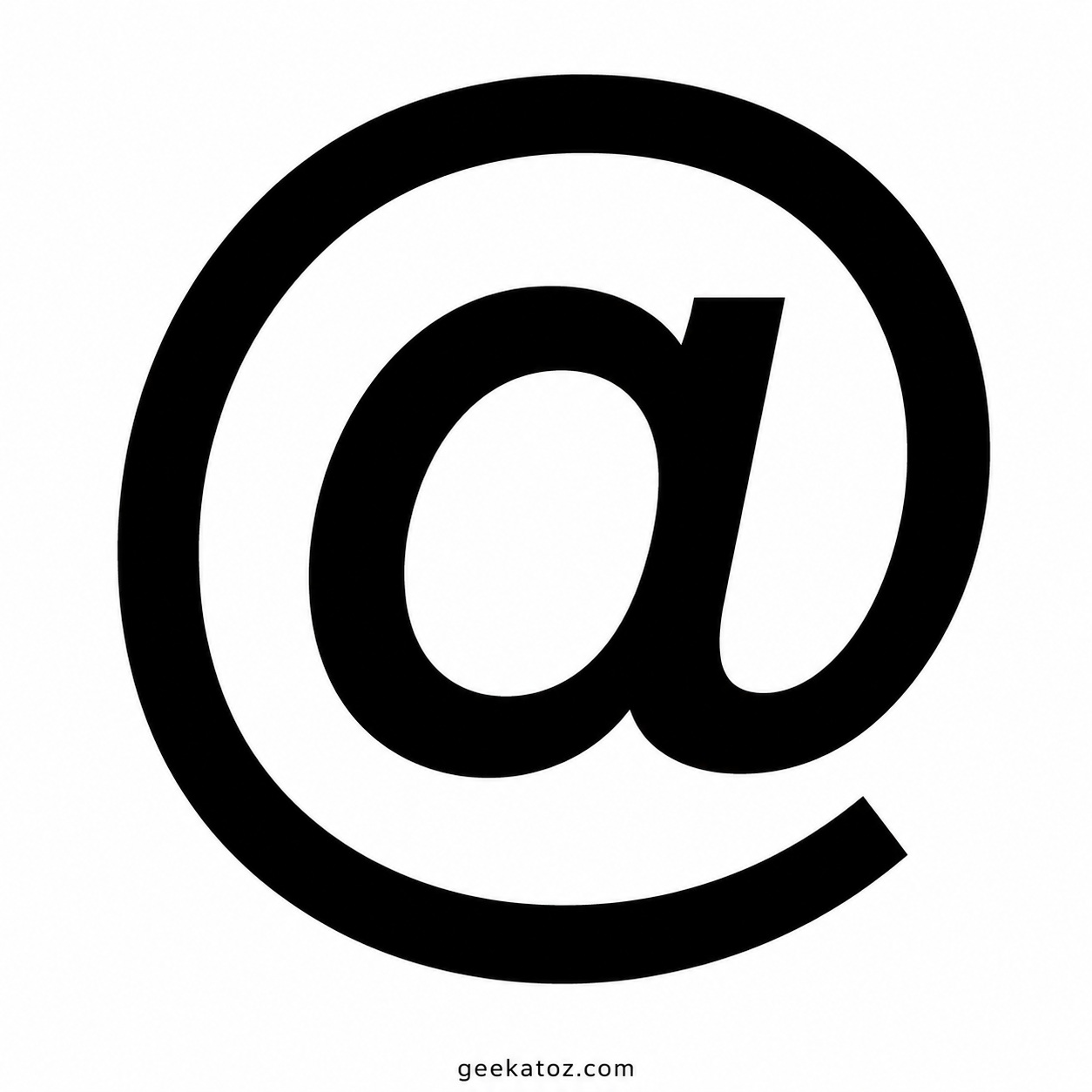
@
That wasn’t inevitable. Somebody had to decide it should be there.
That somebody was computer engineer Ray Tomlinson.
Email Before the @
Electronic messaging already existed before Tomlinson’s work. People using the same large time-sharing computer could leave messages for one another.
The problem was that the message stayed on that computer.
In 1971, while working at Bolt Beranek and Newman (BBN), Tomlinson modified existing programs so a message could be sent across ARPANET from a user on one computer to a user on another.
That created a new problem.
A message now needed to identify not only who it was for, but which computer that person was using.
Tomlinson needed a separator.
Why @?
He looked at the keyboard.
The symbol needed to be something unlikely to appear in someone’s username, and @ had a wonderfully convenient meaning already.
A person was at a computer.
So:
user@host
Tomlinson later described the @ sign as essentially the only preposition on the keyboard.
It was a simple, practical choice.
And it stuck.
More Than 50 Years Later
The computers changed. ARPANET eventually gave way to the modern Internet. Email spread from research institutions to businesses, homes, phones and eventually billions of people.
But the basic convention survived.
user@host
became:
user@domain.com
More than half a century after Ray Tomlinson looked at a keyboard and picked a convenient character, we’re still using it.
There are enormous inventions in computing history: microprocessors, operating systems, programming languages and networks.
And then there are tiny decisions that quietly become permanent.
The @ sign was one of those.
So next time someone asks who put the @ in your email address, you’ll know.
Who is Ray Tomlinson, Alex?